
Building a High-Engagement Digital Creator Platform for a Growing SaaS Company
Riverside operates a digital creator platform serving content creators who produce, edit, and distribute media assets. As the creator economy accelerated, the platform needed to keep pace with user expectations for speed, polish, and seamless workflows. Onboarding friction was high, asset processing was slow, and free-to-paid conversion lagged behind industry benchmarks. Riverside partnered with Advantrix Labs to re-engineer the product from the frontend experience through to the data processing layer, with the goal of turning casual visitors into engaged, paying subscribers.
Project Snapshot
Client profile
Riverside is a mid-stage SaaS company that provides a web-based platform for digital creators and content producers. The platform enables users to create, edit, manage, and publish media assets from a single workspace. Revenue comes from a B2C subscription model with free, trial, and premium tiers. As the creator economy surpassed $100 billion in market size and platforms competed aggressively for creator loyalty, Riverside needed to differentiate on experience quality and workflow speed.
Project goal
Re-architect the platform's frontend and backend to deliver the following.
- A premium, mobile-first user interface that reduces onboarding friction and guides creators from sign-up to first published asset with minimal steps
- A high-performance asset processing pipeline powered by a dedicated processing service, capable of handling media uploads, transcoding, analytics, and data visualisation at scale
- Frictionless authentication via one-click social logins (Google and Apple) to eliminate registration barriers
- Optimised subscription conversion flows that move free users through trial and into paid plans with clear value demonstrations at each stage
- Real-time creator dashboards with content analytics, audience insights, and performance metrics delivered through a flexible data layer
Business challenge
The platform had gained traction among creators but struggled to convert engagement into revenue. Several structural issues held back growth.
- Low subscription conversion: The free-to-paid conversion rate sat well below industry benchmarks. Creators explored the platform but abandoned before subscribing. Research shows that SaaS companies with optimised onboarding flows achieve 2-3x higher trial-to-paid conversion rates, yet Riverside's onboarding was fragmented and unclear
- Slow asset processing: Uploading and processing media files took too long, causing creators to leave mid-workflow. In a market where speed is a competitive advantage, processing delays directly eroded engagement and trust
- Onboarding friction: Account creation required manual email registration with multiple verification steps. Without social login options, the platform lost users at the first gate. Industry data indicates that social login can increase sign-up completion by 20-40% compared with traditional email-and-password flows
- Inconsistent mobile experience: A significant share of creators accessed the platform from mobile devices, but the existing interface was not optimised for smaller screens. Mobile-first design has become a baseline expectation in the creator economy, where many users produce and consume content on the go
- Limited data insights for creators: The platform lacked meaningful analytics. Creators had no visibility into how their content performed, which reduced perceived value and weakened the case for upgrading to a paid plan
- Fragmented backend architecture: The monolithic backend struggled to handle concurrent media processing, API requests, and real-time data serving. Scaling individual workloads independently was not possible, and latency increased as the user base grew
Solution
Advantrix Labs partnered with Riverside to rebuild the platform's core experience and infrastructure, focusing on conversion, speed, and creator engagement.
- Mobile-first, component-based frontend: We built a new, component-based frontend following a strict mobile-first architecture. Every screen was designed mobile-first and then scaled to desktop, ensuring a consistent, polished experience across devices. Server-side rendering improved initial load times and search engine visibility, driving organic discovery
- Streamlined creator onboarding: The sign-up flow was redesigned to reduce steps and surface value immediately. One-click social login with Google and Apple enabled one-tap account creation, eliminating password friction. A guided first-session experience walks new users through asset creation and publishing, ensuring creators reach their first meaningful outcome quickly
- High-performance Python processing microservice: We introduced a dedicated processing microservice for asset processing, content analytics, and data visualisation. This service handles media ingestion, transcoding, thumbnail generation, and metadata extraction. By isolating compute-intensive work from the main application layer, the platform gained the ability to scale processing independently and avoid bottlenecks under load
- GraphQL data layer for real-time insights: A flexible API layer serves creator dashboards with audience metrics, content performance data, and trend visualisations. Creators can see how their work performs in near real time, strengthening the value proposition for premium tiers. The flexible query model also reduces over-fetching and improves frontend responsiveness
- Optimised subscription conversion flows: We restructured the paywall and upgrade prompts based on behavioural triggers. Rather than showing a static pricing page, the platform presents contextual upgrade nudges when creators encounter premium-gated features during natural workflows. Trial periods include progress indicators and value summaries that reinforce what the creator has built and what they would lose by not subscribing
- Scalable hybrid backend: The application layer handles high-concurrency API requests, real-time state management, and authentication flows. The dedicated processing service manages data-heavy operations. This hybrid architecture allows each layer to scale independently, improving reliability during traffic spikes and reducing operational costs
Solution gallery
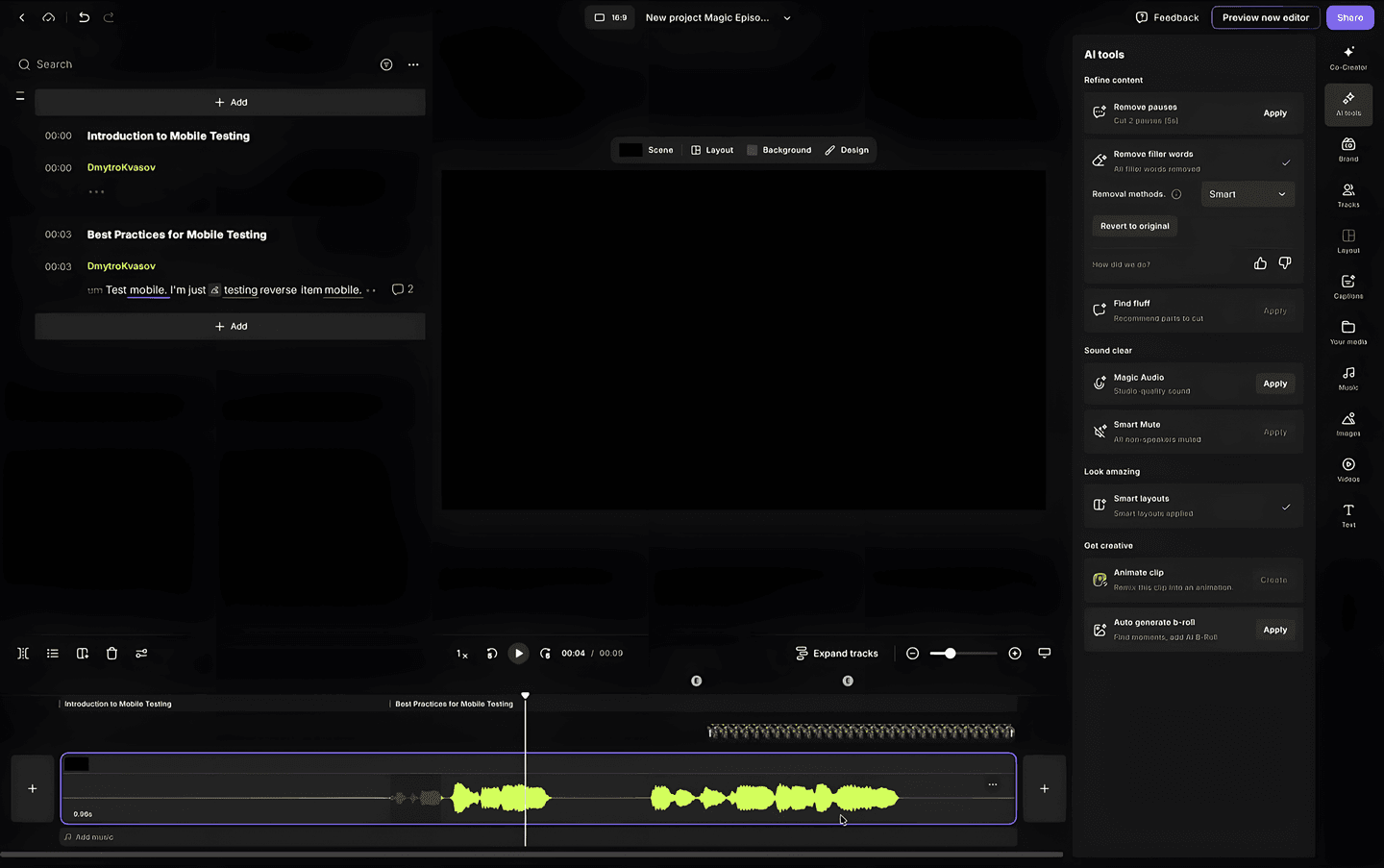
Product and workflow visuals from the delivered solution.
Business outcomes
By re-engineering the creator experience from onboarding through asset processing and subscription conversion, Advantrix Labs helped Riverside transform a promising but underperforming platform into a high-engagement, revenue-generating product.
- 45% increase in subscription conversions: Streamlined onboarding, OAuth social logins, and contextual upgrade prompts significantly improved the free-to-paid conversion funnel. Reducing friction at every step meant more creators completed trials and subscribed to premium plans
- 50% growth in daily active users: The mobile-first redesign, faster load times, and real-time creator dashboards made the platform more engaging and useful on a daily basis. Creators returned more frequently to check performance metrics, manage assets, and publish new content
- 60% reduction in data processing latency: The dedicated processing microservice architecture eliminated processing bottlenecks that had caused creators to abandon workflows. Media uploads, transcoding, and analytics now complete in a fraction of the previous time, keeping creators in flow
- Stronger creator retention: By providing meaningful analytics and a polished experience, the platform increased perceived value and reduced churn. Creators who can see the impact of their work are more likely to remain active and maintain subscriptions
- Scalable foundation for growth: The hybrid microservice architecture and component-based frontend give Riverside a platform that scales with demand. New features, integrations, and content types can be added without re-architecting the core system